Neon's glow returns: warsaw's cold war relics spark a revival
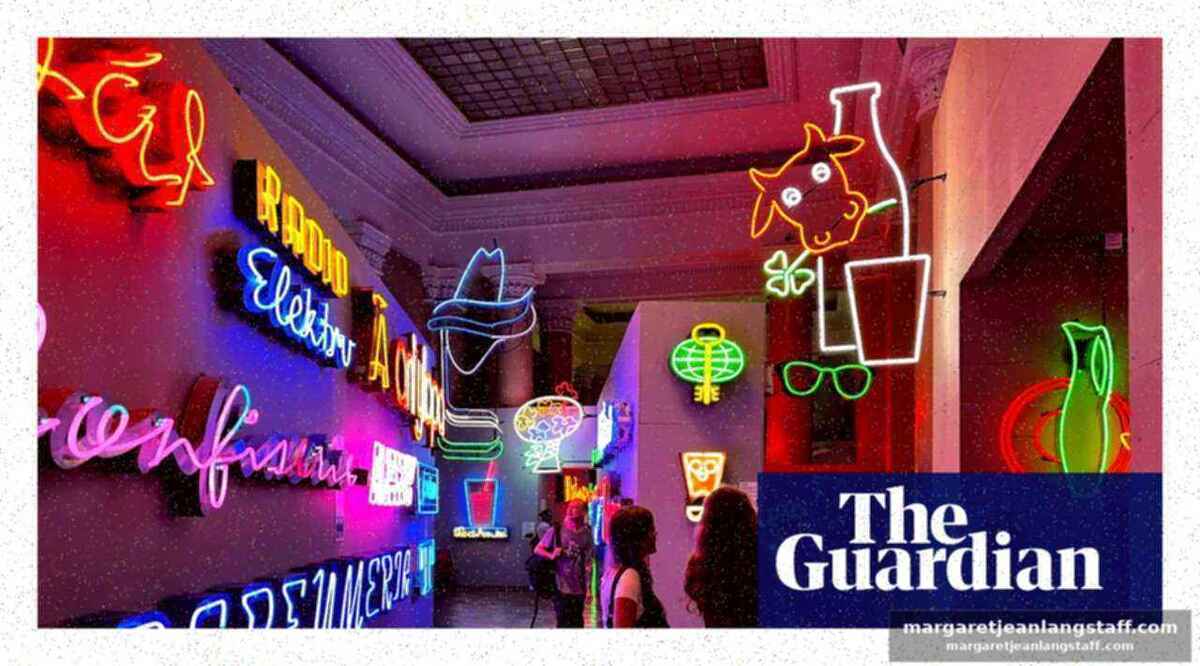
They once pulsed with Soviet-era propaganda, beacons of a fading ideology. Now, Warsaw's forgotten neon signs are experiencing an unlikely renaissance, drawing over 100,000 visitors annually to the city's Neon Museum and illuminating a renewed fascination with a bygone aesthetic.
From rust to revival: a photographer's obsession
The story began not with grand ambitions, but with a simple observation. Polish-British photographer Ilona Karwińska, while documenting the city in 2006, noticed the decaying beauty of these luminous relics – remnants of a Cold War era where vibrant signage battled the pervasive grey of communist rule. What started as a personal project photographing the fading signs quickly evolved into a full-blown obsession for Karwińska and her partner, graphic designer David Hill. “We thought it would take a couple of months,” Hill admits with a rueful chuckle, “Now, it's our lives. We’ve become neon nerds.”
After Karwińska’s evocative photographs appeared in several bestsellers and ignited public interest, the floodgates opened. Offers of rescued signs poured in, culminating in the 2012 opening of the Neon Museum – a testament to collective nostalgia and a surprising cultural value.
A history etched in light
The origins of neon signage trace back to the late 19th century, with the discovery of noble gases. Georges Claude’s pioneering use of high-voltage electricity to illuminate sealed glass tubes brought this technology to the commercial world. Warsaw’s first neon sign arrived in 1926, a precursor to the 70 that would eventually adorn the city. Tragically, many were obliterated during World War II when the retreating Nazis razed much of Warsaw in retaliation for the 1944 Uprising.
The postwar era witnessed a deliberate “neonisation” of Poland, spearheaded by the state-controlled Reklama company. While serving as a tool of Soviet propaganda, the policy also unexpectedly fostered a wave of artistic creativity. The nation's leading graphic designers, including luminaries of the Polish Poster School movement, imbued the signs with a unique visual flair, often skirting the boundaries of strict ideological control. As Hill explains, “Some stern Soviet bureaucrat would have had to approve the sign, and they were dead against logos suggesting western commercial advertising. But a creative design would become so popular that it would be replicated, and suddenly it was a logo.”

More than just decoration
The neon signs embodied a complex duality. They represented a desire for modernization and optimism, a flicker of hope in a landscape of austerity. The enforced darkness during the 1981-1983 period of martial law, when the lights were extinguished in response to Solidarity protests, underscored their symbolic significance.
Today, the Neon Museum isn't simply preserving artifacts; it's actively returning them to the cityscape. A towering red cockerel, once a landmark of a demolished folk art warehouse, now stands proudly near a new apartment block. The Syrenka, Warsaw’s mermaid emblem, has been resurrected, gracing a prominent location. This active restoration, coupled with a new generation of architects and designers embracing neon, signals a genuine cultural shift.
The recently unveiled “It’s nice to see you” sign, spanning the Gdański Bridge across the Vistula River, is a prime example of this renewed interest—a playful and contemporary interpretation of a classic aesthetic. The project, born from a city-wide competition, demonstrates that neon's appeal transcends generational divides.
Karwińska and Hill are now expanding their mission, planning a second museum in Budapest. As Hill concludes, “People have realized the value of these signs. Lots of older generations remember them and get quite teary-eyed, because they often represented important places. They say things like, ‘This is where I met your mother.’ The revival is real, and the love affair with neon signs is definitely catching on.”